
MISSION OVERVIEW
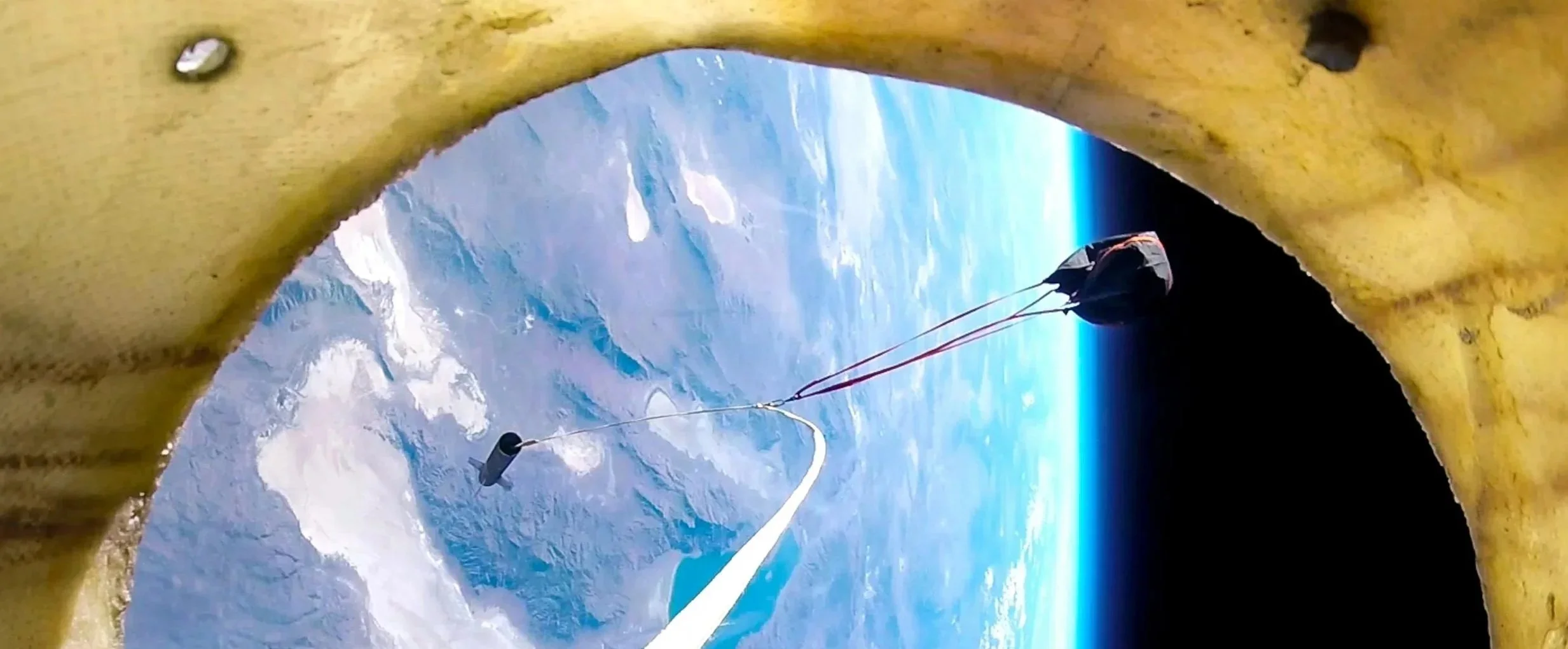
In April of 2026, RPL returned to to space with Daybreak. This vehicle represents the culmination of several years of design, integrating the development projects flight-proven on Malibu, such as the boattail and dual-deployment recovery system, into the 8-inch high-performance form factor validated by Aftershock II. Daybreak also carried a total of five payloads from other university teams and industry providers past the Karman line, and was recovered fully intact. The mission demonstrated RPL's continued advancement and marked the first time a U.S. student team launched and recovered a spaceflight vehicle while serving as a payload provider.
TECHNICAL DETAILS
Following the successful launch and recovery of Daybreak, data from the on-board avionics unit (in addition to data from our mission partners) was collected and used to determine flight performance. Data from Embry Riddle Aeronautical University’s MOSAIC GPS module yielded a high resolution apogee of 331787 ± 7 ft. AGL, establishing Daybreak as USCRPL’s third successful spaceshot. In addition, maximum speed was determined from onboard accelerometers as 4700 ± 400 ft/s.
| Apogee | 335,695 ft (102,320 m) |
| Max Velocity | 4,700 ft/s (1,433 m/s) |
| Motor Designation | GEM8-R4000 |
| Max Mach | 4.3 |
| Burn Time | 16.3 s |
| Flight Time | 670 s | Total Vehicle Mass | 345 lbm (156 kg) | Dry Mass | 145 lbm (66 kg) |
| Propellant Mass | 200 lbm (90 kg) |
Development Projects
Boattail |
| The boattail is a tapered composite structure located at the aft end of the vehicle that shrouds the rocket's nozzle. Manufactured using composite materials supplied by Cambium, it's low mass while withstanding the thermal demands of flight. The reduced aft diameter decreases aerodynamic base drag, while its placement enables the use of larger motors without increasing the diameter of the airframe. This configuration also increases usable internal volume, allowing more space for payload and recovery systems. |
Dual Deployment |
| The dual-deployment recovery system uses a two-stage parachute sequence. A drogue parachute deploys at apogee to stabilize the rocket while it still falls relatively fast. A larger main parachute deploys at a lower altitude to allow the rocket to land softly. In comparison to the previously used single-deployment system, this causes the vehicle to travel less distance on descent and have a lower landing velocity. Unfortunately, Daybreak's recovery system became tangled during descent, preventing the main parachute from deploying. Despite this, Daybreak was successfully recovered with minimal damage. |